What is Baja SAE?
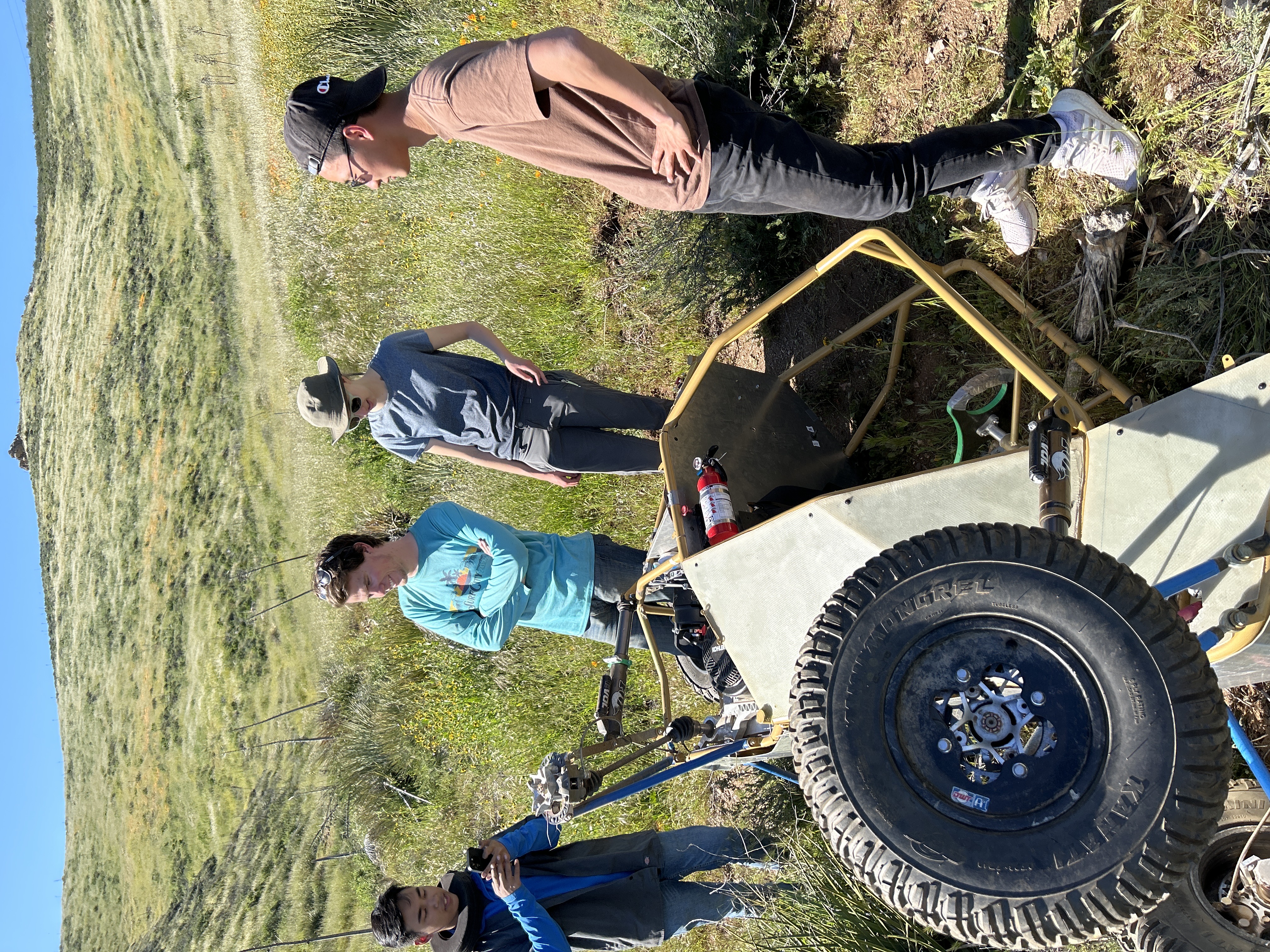
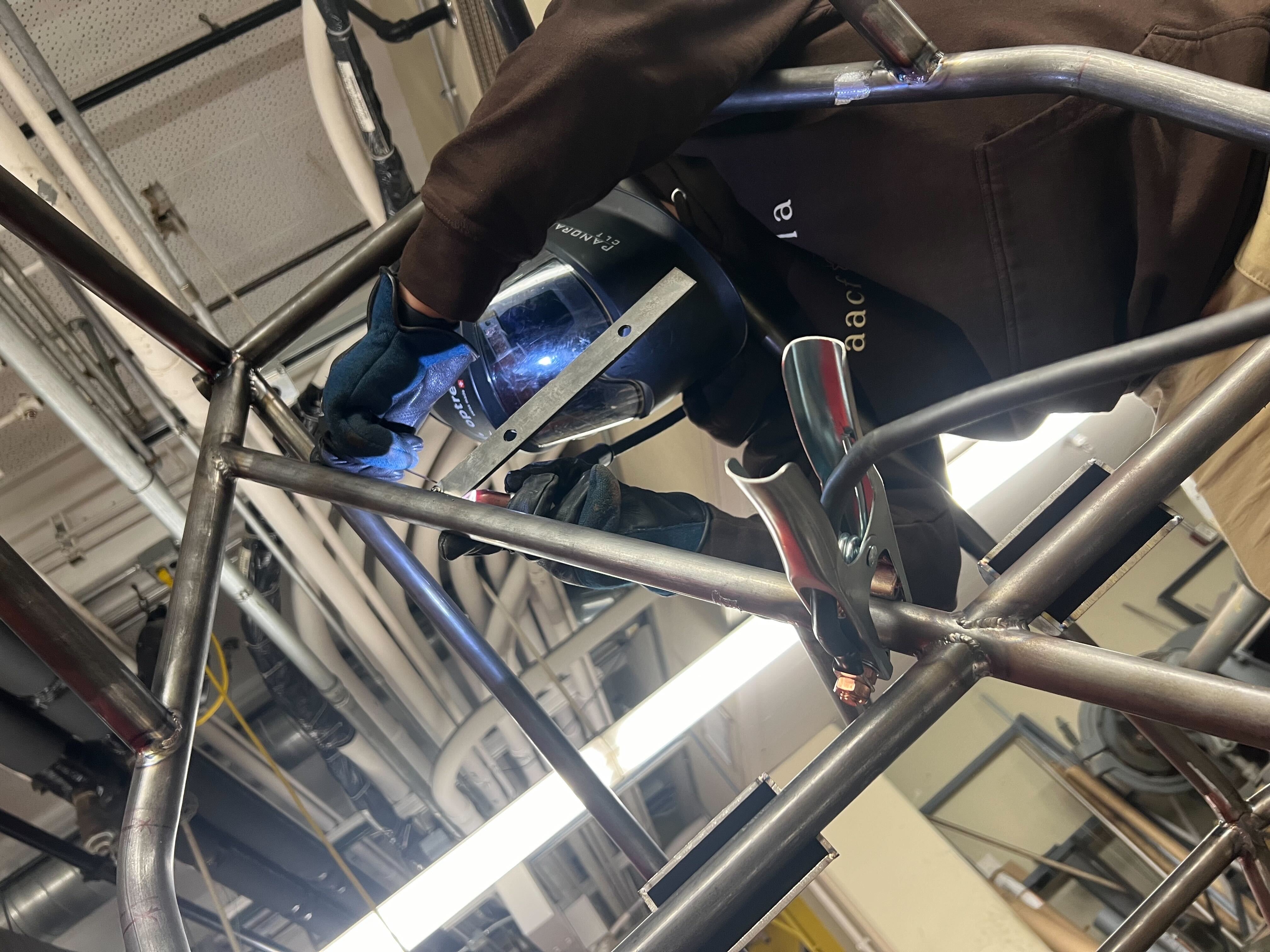
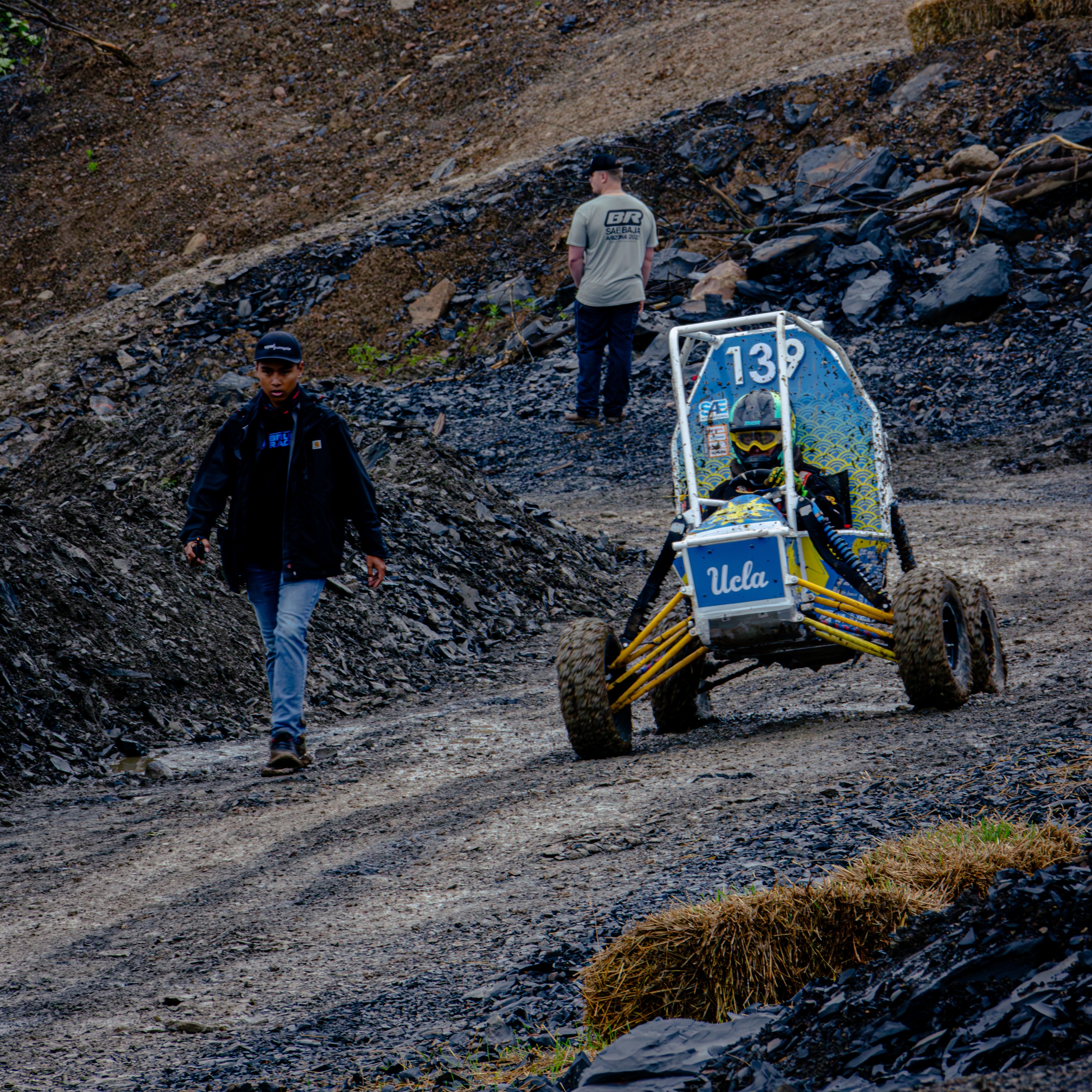
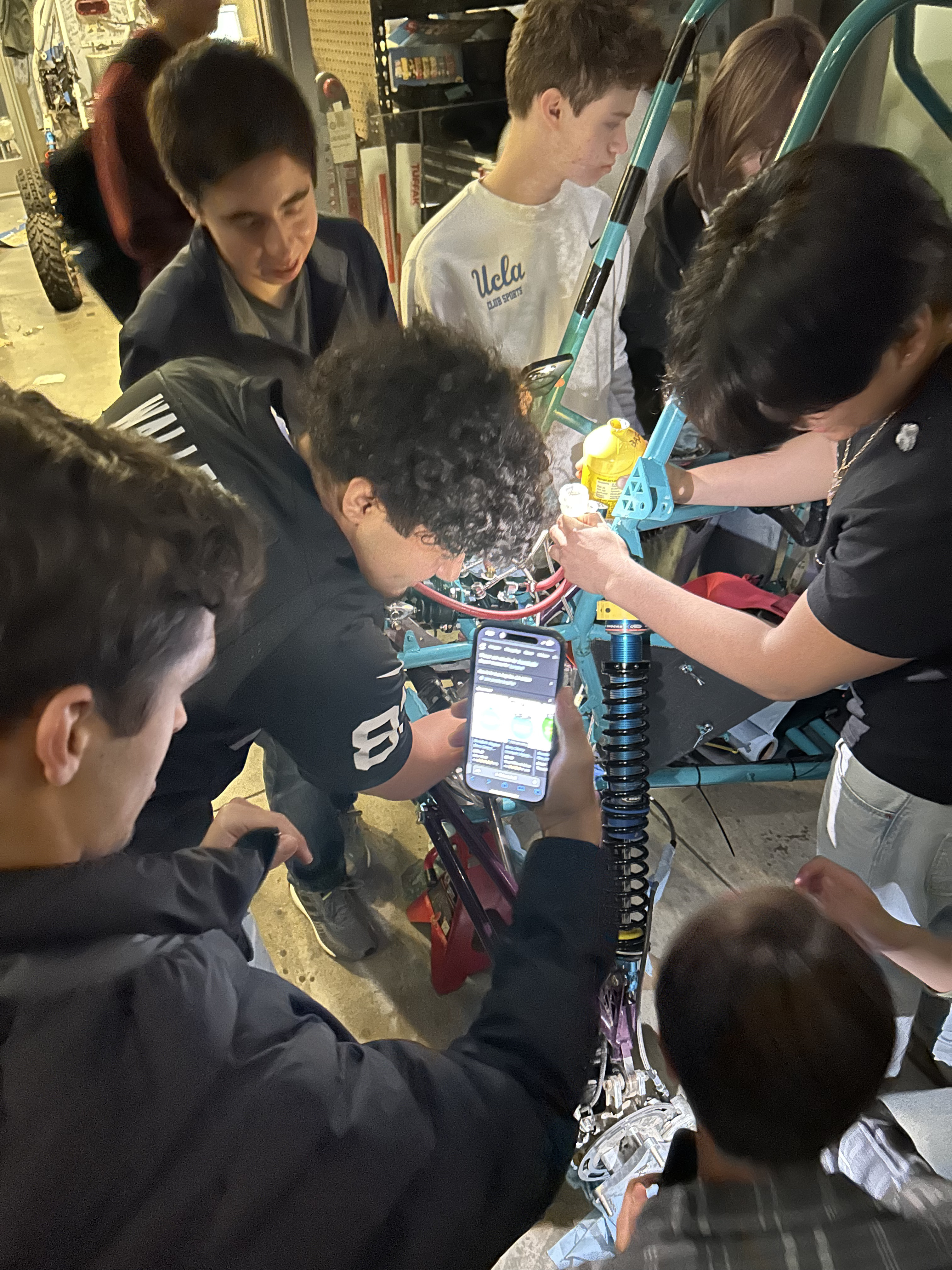
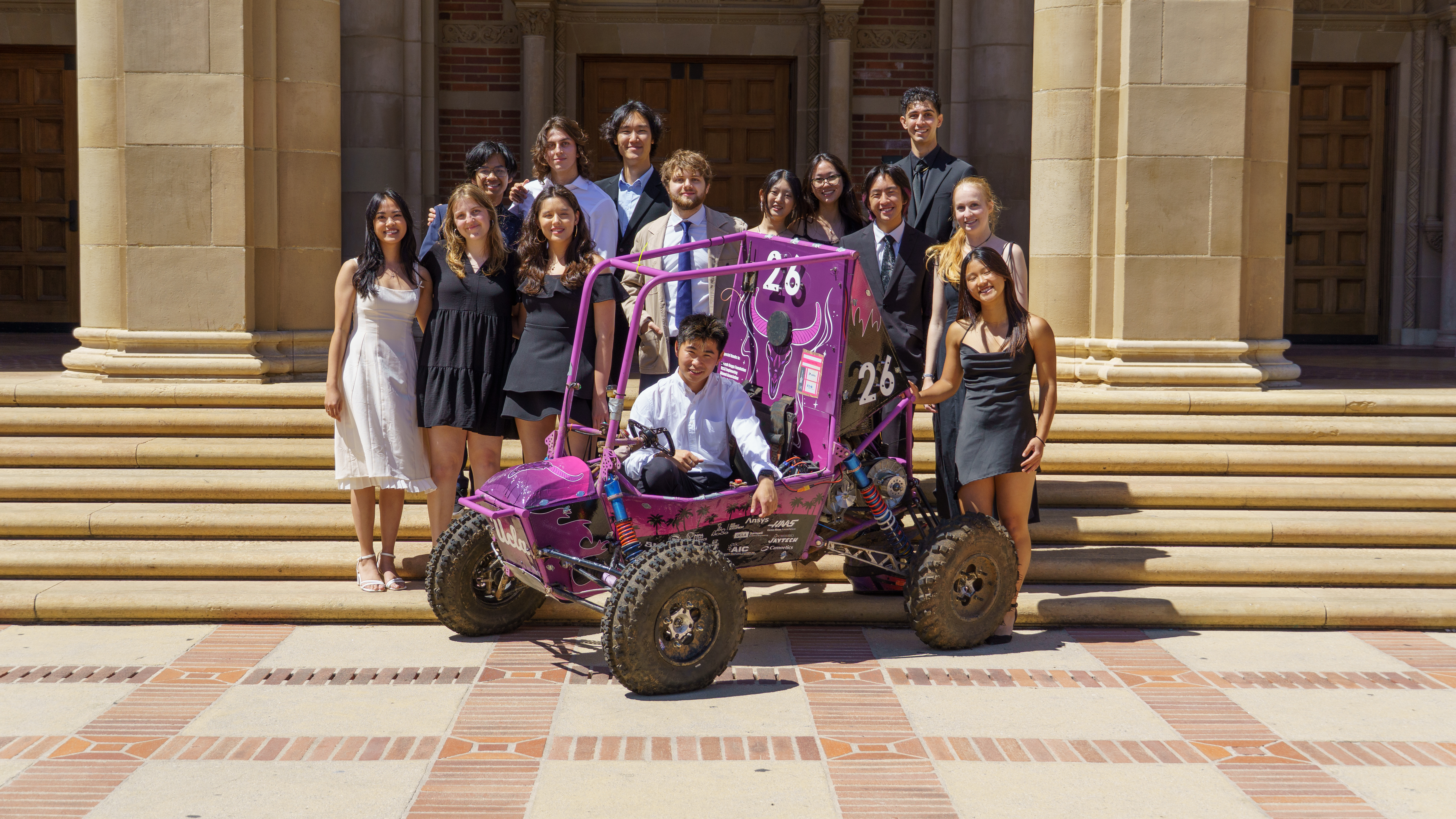
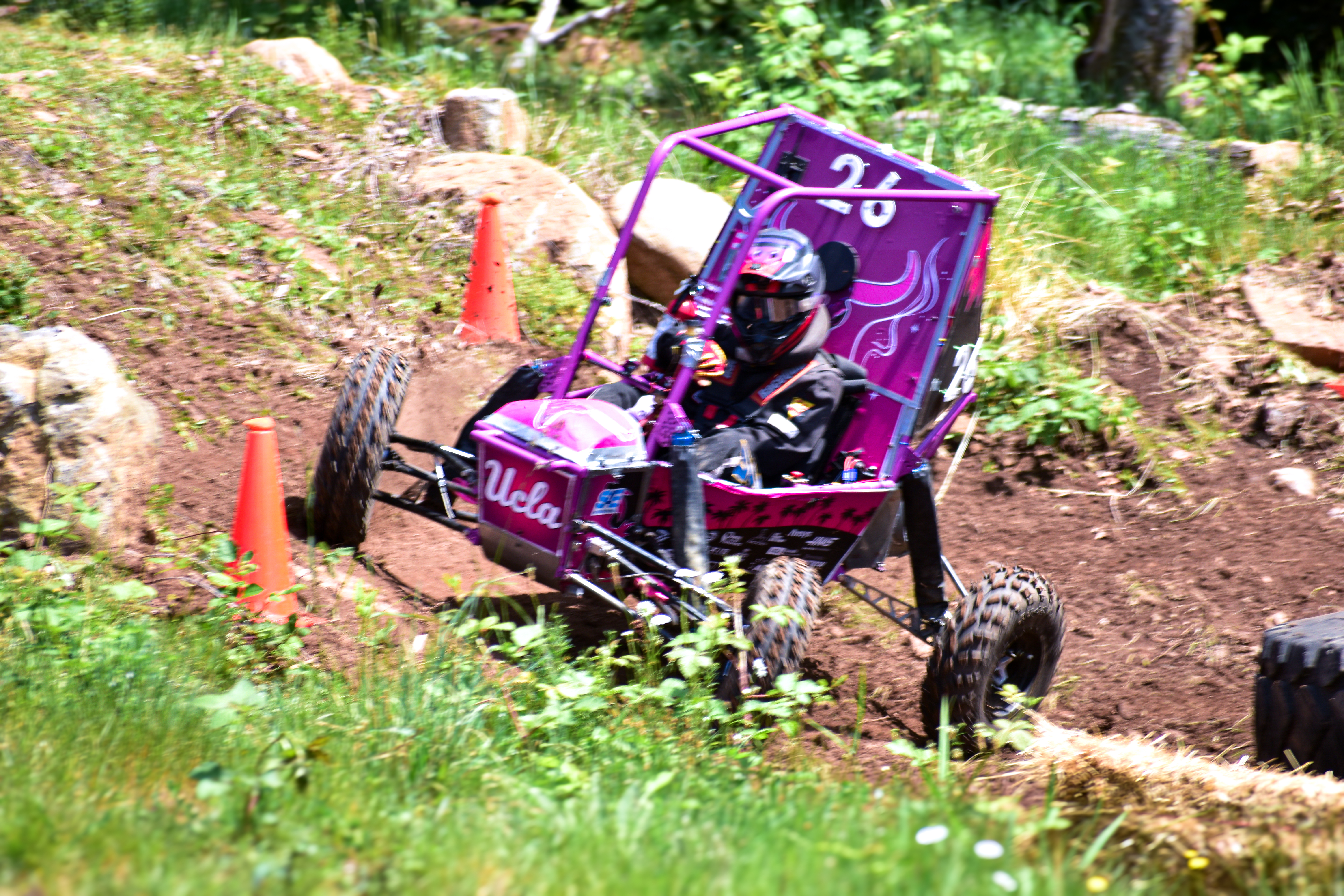
Frankly, a Google search may provide a much better description to what Baja SAE is (especially for those visual learners out there). But to describe it myself, Baja SAE is a collegiate team that designs, fabricates, assembles, tests, and competes a one-seater off-road buggy against a host of other schools - inspired by the Baja 1000, a super-cool off-road race that you should definitely check out.
The second best thing I can do is to give you a little compilation of GoPro footage of our driving here.
Now, why exactly is Baja SAE so prominent? Or, for that matter, any of the SAE programs and tracts so popular among the collegiate engineering community?
By far, the experience. It's a lower-stakes sandbox compared to industry. You recieve exposure to the full engineering design cycle without needing to worry too much about processing issues and KPIs (bar, of course, basic DFM/DFA principles). You get hands-on experience building something. You're the first thing someone thinks about when the word "engineer" comes up. You get to learn the difference between SAE Grade 8 and 9 bolts and nuts!!
In all seriousness, it's been a monumental journey and has greatly served my technical growth and advancement as an engineer. You can learn more about this development in the About page, but the short version is that a sizable portion of what I learned about engineering is attributed to my time at Baja SAE.
What do I do on this team?
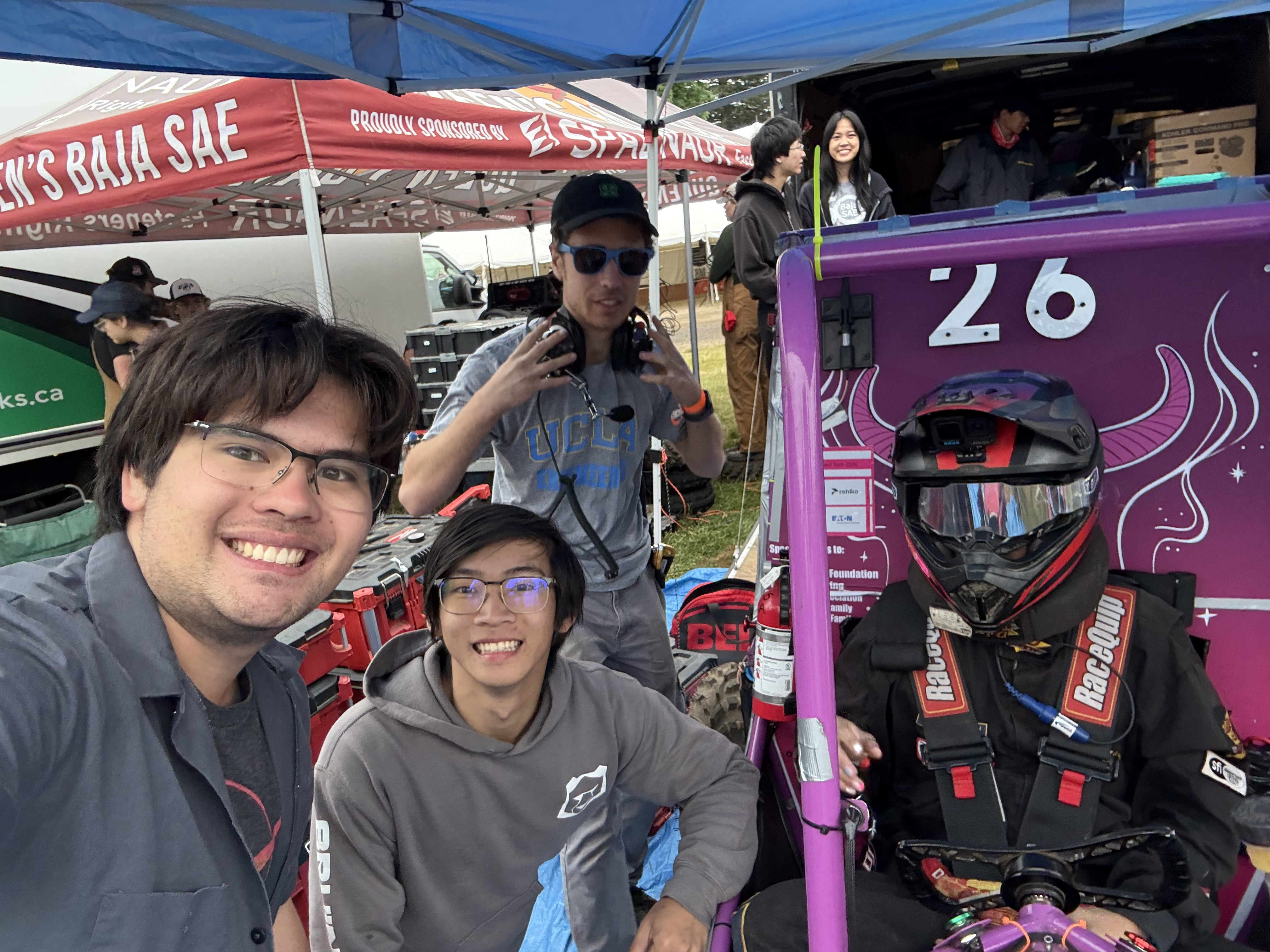
I served two primary leadership roles on this team. The first was as our Driver Interface lead, the second as our Suspension lead. In addition, I led the media team and was the primary competition driver.
Driver Interface consists of essentially everything the driver touches or interacts with. This includes the steering system, brakes system, throttle, and general ergonomics. Suspension involves anything that connects the chassis to the ground, including all linkages, machined hubs/knuckles/uprights, shocks, and tires. Both roles involve management over multiple project engineers and subsystems, facilitating integration with other subteams, and all relevant troubleshooting.
Ultimately, we were able to build on previous innovations and develop novel systems that accomplished the following:
1. Increase in turn angle to over 35 degrees
2. Minimizing excess chassis clearance (while staying rules-legal) to reduce frame weight by 8%
3. Developed new lower control arm shock mount (more on the materials side of this in the Capstone page)
As the competition driver, I led our vehicle to multiple top-15 event finishes. Notable finishes include the suspension and traction event in Arizona (2025) and the rock crawl in Oregon (2026). During the tuning season, I spent hours interfacing with multiple subteams to optimize controller parameters, ensure optimal ergonomics, determining vehicle dyanmic paramters (spring rates, compression/rebound, crossover behavior, etc.).
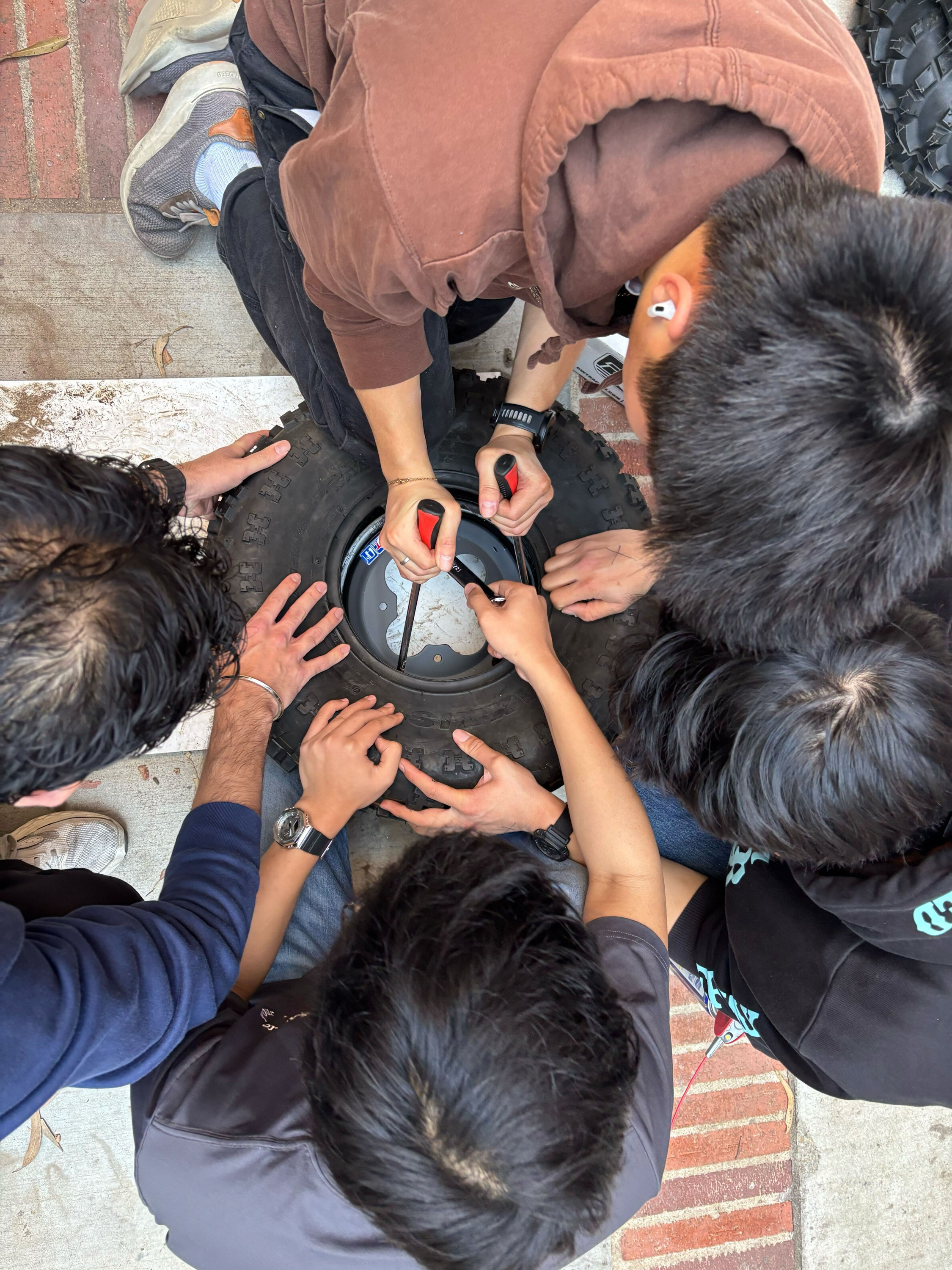
The Technical Side
There was a great deal of learning vehicle dynamics. A good amount of time was spent in the Milliken textbook Race Car Vehicle Dynamics, trying to understand the theory behind our wheel rates. Of course, the off-road nature adds a layer of obfuscation. While FSAE and Formula One have much more reliable and predictable documentation and literature (rightfully so, since the industry is much bigger), this gives Baja SAE the unique position of relying more on first-principles, extrapolation, and field testing. Prof. Efstathios Velenis of Cranfield Univ. (UK) mentioned this during our conversation: off-road dynamics are not an abbreviation of literature, but rather a challenge in and of itself. That summed up this learning journey quite well - there was a good bit of "scrappy" engineering extracted directly from the fundamentals.
Ultimately, while we saw great behavior in shock behavior during competition, the fight is still not won! Knowledge transfer ensures that my journey can aid the walks of others as they attempt to demystify vehicle dynamics. Plus, there is still so much I don't know.
But that doesn't mean I can't try. Attached are just some remnants of me trying to show what I've learned - including from my undergrad Materials Engineering major! Mind the intermittent sarcasm - it works very well with my Baja colleagues to enhance their learning experience.
Steering Knowledge Presentation
Spring Rate Calculator Explanation
Spring Rate Calculator
Springs and Shocks Writeup
Baja Materials Science Presentation
Driving Guide!
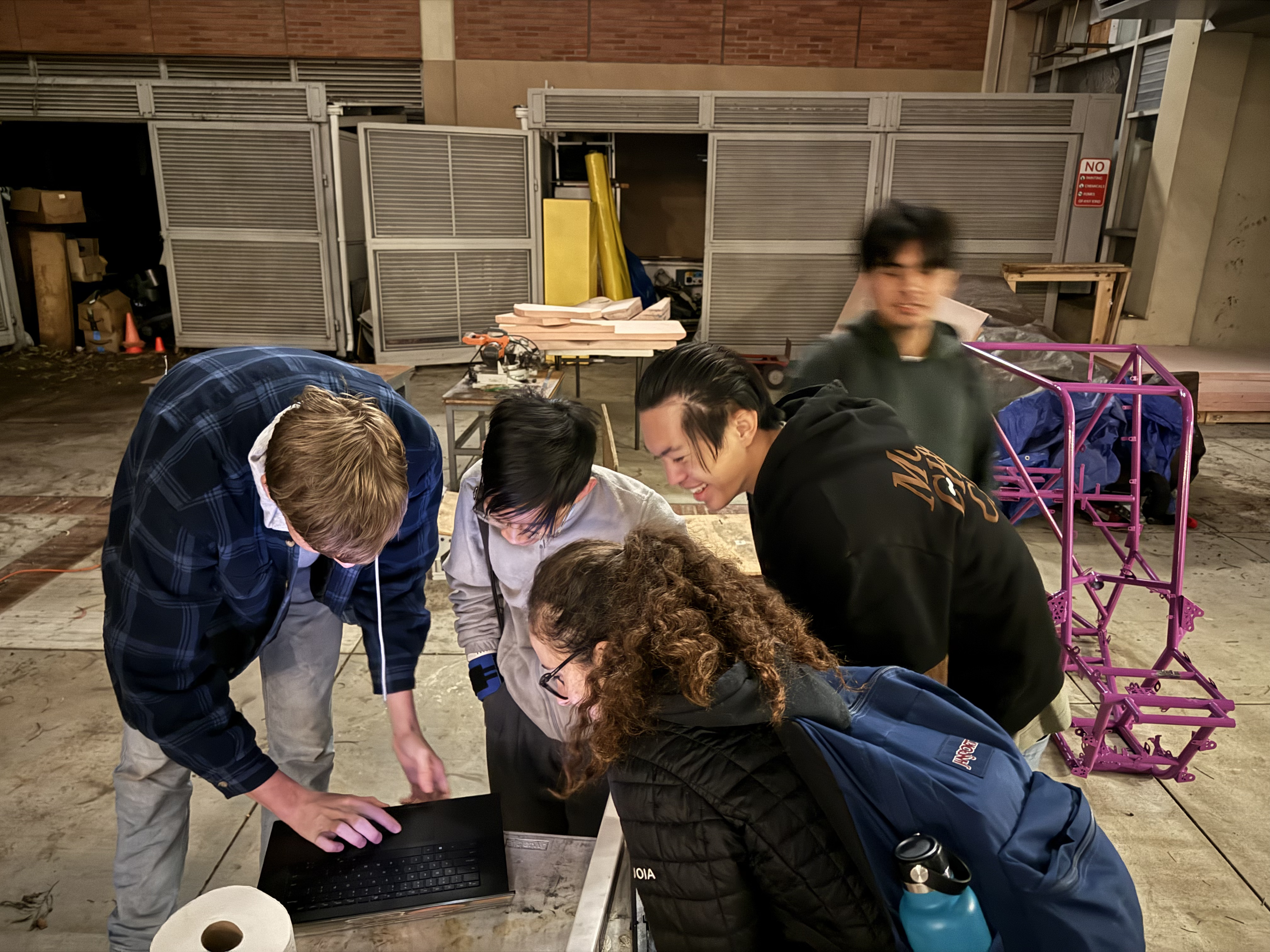
The Managerial Side
Of course, managing a team has been, in and of itself, a very humbling experience. Frankly, it's why I wanted to pursue an M.Eng degree, as opposed to an M.Res or M.Sc. I find that the joy of technical accomplishment is made much sweeter by the sharing of that accomplishment with a team. It was especially meaningful to lead and share my enthusiasm for both automotive and materials engineering industries.
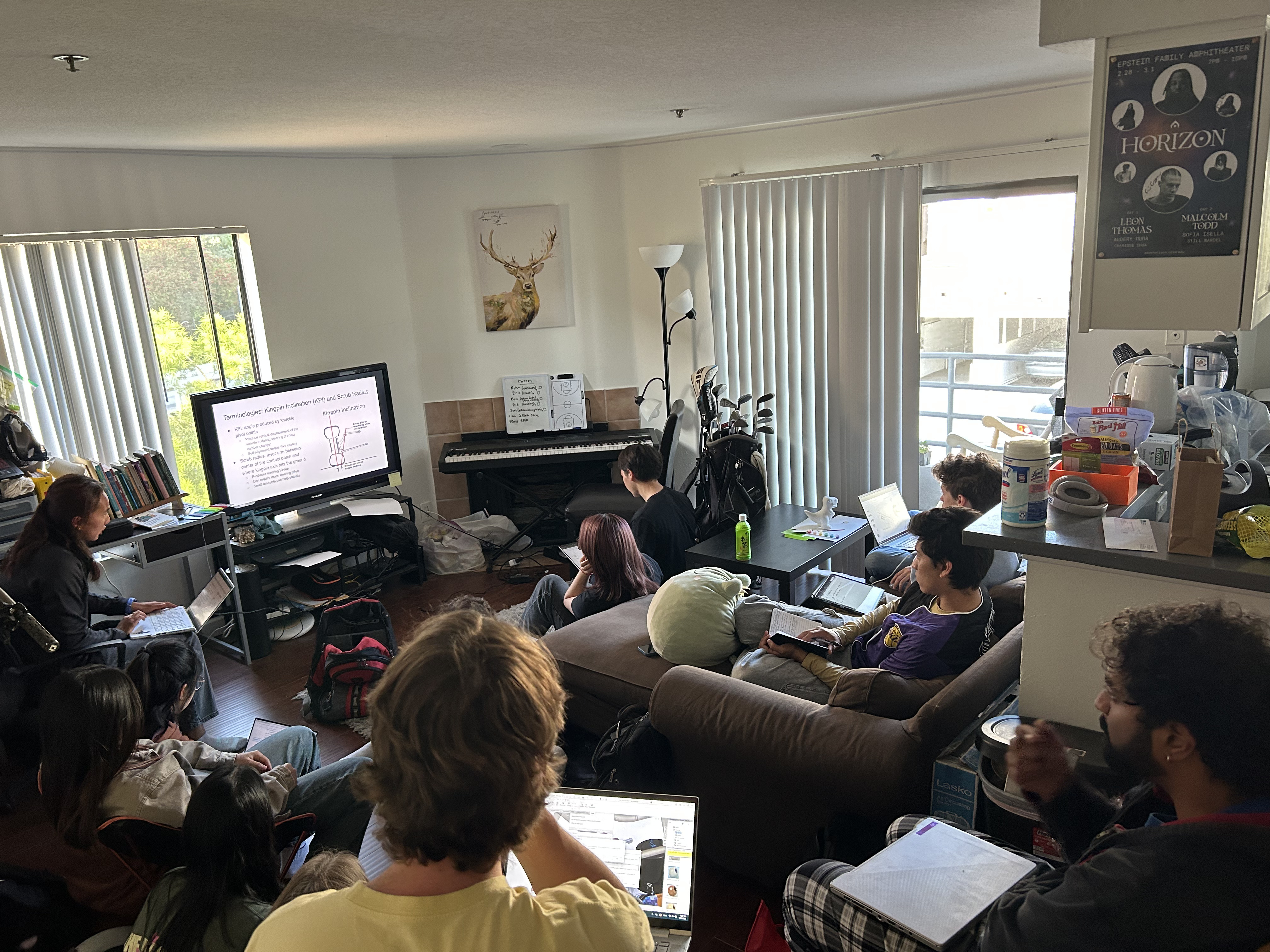
Over the two years I spent as lead, I organized multiple knowledge transfer sessions that targeted not only technical information, but the broader implication, industry equivalents, and garnered enthusiasm for whatever I was presenting on. These were a great success, given that my apartment was always full during these sessions. We learned that team enthusiasm is as critical for successful project management as technical ability.
In fact, accomplishing this has ignited a love for Program/Project Management. I hope to take the management skills from Baja and my M.Eng degree and find a management job similar to what I did at Baja - doubly so if within an automotive/motorsport environment!